← Gazillion Industries/Reading material
How to make Dilla type beats
Gazillion Industries ·
The feel you are chasing is loose and human. Drums land slightly late or early on purpose, hi-hats swing against the grid, and the snare sits behind the beat in a way that feels lazy but is actually deliberate. Chords come from jazz voicings played on keys or pulled from old soul records. This guide walks through how to build that kind of beat from scratch, step by step.
Turn quantise off and play the drums in by hand. The feel comes from hats and snares landing a few milliseconds off where the grid wants them, consistently, in a way a swing setting cannot reproduce because swing moves everything by the same amount. Then treat the drums so they sit in the same room as the sample rather than on top of it.
The short version
- Quantise
- off, and played in by hand
- Where the feel is
- hats and snares a few ms off the grid, consistently
- Not the same as
- a swing setting, which moves everything equally
- Tempo
- usually high eighties to mid nineties
- Drums sit
- in the same room as the sample, not on top of it
- Gets it wrong
- quantising after, or cleaning the sample up
What people actually mean by the feel
The feel is a loosening of the relationship between the drums and the pulse underneath them. When you program a beat on the grid, every hit lands exactly where the metronome says it should, and the result is tight but static. The feel comes from nudging individual hits a few milliseconds early or late, not uniformly, but in a pattern that feels like a person playing rather than a machine placing. The kick drifts slightly behind the downbeat, the snare pushes a hair ahead of the backbeat, and the hats float somewhere between the two. None of these offsets are large enough to sound like a mistake. They are just enough to make the groove feel like it is breathing.
What separates this from sloppy timing is intention. A drummer who is slightly off the grid in a live take has a reason for each displacement, even if they cannot articulate it. The kick lands late because the foot is heavy and the body is leaning back. The snare lands early because the wrist is snapping forward. When you program these offsets by hand, you are imitating the physics of a body moving through a groove. The result is a beat that sounds like it was played by someone who is slightly tired, slightly drunk, or slightly in love with the pocket, and that is exactly what people mean when they say they want the feel.
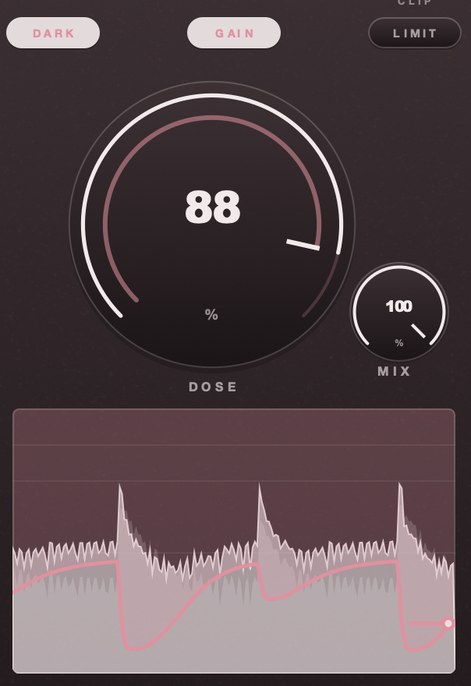 DOSE 88. It dives on each hit and takes the bar to come back.
Turning the quantise off and what happens
When you turn quantize off, you stop letting the software decide where a hit lands and start deciding it yourself. The grid is still there visually, but nothing snaps to it anymore. You place each kick, snare, and hat by ear, dragging or pushing it against the grid line until it feels right under your hand. This is not the same as applying a swing percentage, because a swing percentage shifts every hit by the same amount in a predictable pattern. Here, each hit gets its own offset, and the offsets change from one bar to the next. The groove comes from the inconsistency, not from a formula.
What you hear when the hits land off the grid is a sense of drag and push that a quantized pattern cannot produce. The snare sits a hair behind the beat, not because a setting told it to, but because you nudged it there by hand. The hats might land slightly early on one pass and slightly late on the next, and that variation is what makes the groove feel alive rather than mechanical. The kick can sit dead on the downbeat while everything around it floats. None of this is random. You are listening for where the pocket is and placing each hit to sit in it.
The practical way to work this way is to lay down a basic pattern with quantize on, then go hit by hit and nudge each one until it feels right. You are not applying a global swing amount. You are adjusting individual hits, sometimes by a tiny fraction of a beat, sometimes more. The hi-hat on the second eighth note might need to come forward a touch while the one on the fourth stays put. The snare on the backbeat might need to lag. You do this by ear, not by looking at numbers. The result is a groove that breathes because the spacing between hits changes from one bar to the next, instead of repeating the same offset every time.
Where the swing really comes from
The swing in these beats does not come from a swing control on a sequencer. It comes from the producer placing each hit by hand, nudging it a few milliseconds early or late relative to where the grid would put it. The kick might sit dead on the downbeat while the snare drifts a hair behind it, and the hats land somewhere between the two, creating a loose, rolling pocket that no single percentage setting can replicate. You are not applying a uniform offset to every note. You are making a decision about each individual hit.
What makes this feel organic rather than mechanical is that the offsets are not consistent. One snare hit might be late by a small amount, the next by a slightly different amount, the one after that pulled forward instead. The variation between hits is what gives the groove its human quality. If every snare in the pattern is nudged by the same value, the result sounds like a quantization preset with a weird name, not like a drummer playing slightly behind the beat.
The interaction between elements matters as much as the individual offsets. A hat that lands just before a snare creates a sense of forward motion, while a hat that lands just after creates a laid-back drag. These relationships between neighboring hits are what the ear actually hears as swing. The grid is a reference you are deliberately ignoring, not a system you are modifying.
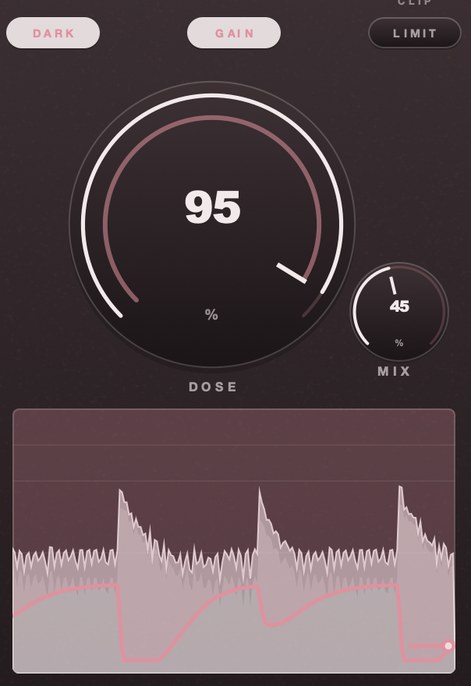 DOSE 95, MIX 45. The squashed copy under the dry one, without a send.
Chopping and how much to keep
When you chop a sample, resist the urge to keep every hit. A full drum break played straight through will sound like a drum break. What you want is a fragment, a single snare hit, a ghost of a hi-hat, a crash that bleeds into silence. Pull one or two hits from a longer phrase and let the rest of the bar sit empty. The space between your chops becomes part of the groove. If you fill every gap with another slice, you lose the tension that makes the pattern feel alive.
A good rule is to keep less than you think you need. Take a four-bar phrase and pull out only the hits that carry weight, the ones that land on beats you would not otherwise emphasize. Leave the rest. You can always add another slice later, but removing a chop after the fact means rebuilding the whole pattern around it. Start sparse. Let the kick and snare do the talking before you layer in extra texture.
The reason this works is that your ear fills in what is missing. A snare that appears once in a bar, then vanishes for three beats, creates a sense of anticipation that a continuous pattern cannot. The listener hears the absence as much as the presence. When you chop, you are not assembling a drum kit from parts. You are sculpting silence around a few chosen sounds and letting the gaps do the work.
What to do to the drums after
Once the hits are placed and the timing feels right, the next step is shaping how each drum sits in the mix. Snares often benefit from a mid-forward EQ curve, rolling off the very bottom so the kick owns that space. A touch of saturation on the snare bus adds body without making it sound synthetic. Kicks tend to work best when they are short and punchy rather than long and boomy, so trimming the tail with a gate or simply choosing a shorter sample helps the groove stay tight.
Reverb is where restraint matters most. Many of these beats sound almost completely dry, with the snare and hats sitting right on top of the mix with no tail at all. If you do add space, keep it very short, a small plate or room with the decay turned down until you can barely hear it. The goal is to make the drums feel close and immediate, not to place them in a room. A subtle slap-back on the snare can add a hint of depth without washing out the transient.
On the drum bus as a whole, a gentle compressor with a slow attack lets the transients through while gluing the hits together. A light high-pass filter on the bus removes any sub content that competes with the bass line. Some producers run the entire drum bus through a tape-style saturator to soften the digital edge and make everything feel like it came off the same machine. The overall result should sound like the drums were played on a single piece of hardware, slightly compressed, slightly warm, and sitting in a narrow frequency band that leaves the low end and the high end open for the bass and the keys.
What gets it wrong
Turning up the swing control on a DAW gives you a uniform percentage offset applied to every offbeat hit. That is not what is happening in the records that define this style. The actual feel comes from each hit landing at a slightly different distance from the grid, some early, some late, some barely off, some way off. A uniform offset makes everything feel like it was done by a machine with a single setting, which is exactly the opposite of the loose, human, slightly sloppy quality that defines the sound. The swing knob is a shortcut that produces a mechanical looseness rather than a real one.
Producers reach for crisp, modern drum samples with clean transients and then wonder why the timing feels wrong when the sounds are right. The drums in this style are often dry, sometimes clipped, sometimes just a fragment of a breakbeat with its own noise floor baked in. The snare is not a pop. It is a thud or a slap with no high-frequency ring. The hats are often barely audible, a texture more than a rhythm. If your drums sound produced, they are too produced. The wrong sound makes the wrong timing feel worse than it is, and the right sound makes even a slightly off pattern feel natural.
Some producers quantize everything to the grid and then manually nudge individual hits off it. This creates a pattern that looks irregular on the piano roll but still feels locked because the underlying grid is doing the organizing. The better approach is to program by ear, tapping hits in without any grid reference, or to draw them in by hand while listening to the loop and matching the feel rather than the position. The grid is a crutch that makes the timing look wrong while keeping it feeling wrong. Trust your ears over the visual alignment.
Questions people ask
Do you need a hardware sampler to make beats like this?
No. The sound comes from how you program the drums, not from a specific machine. Any sampler or sequencer that lets you nudge individual hits off the grid will get you there. The key is learning to place kicks, snares, and hats slightly ahead or behind the beat, and to leave gaps where a quantized pattern would fill them.
Why do my unquantised drums just sound sloppy?
Unquantized drums sound sloppy when the offsets are random. The difference between sloppy and musical is intention. If every hit drifts by a different amount, it reads as a mistake. If the kick consistently pushes slightly late and the snare pulls a hair early, your ear hears a groove instead of a mess. The pattern has to be consistent across the bar.
What tempo are these beats usually at?
These beats tend to sit at a slow, laid-back tempo, often hovering around the lower end of the mid-range. The feel is unhurried, with a slight drag that gives the groove a loose, human quality. Producers working in this style usually keep things well below the faster club-oriented tempos, letting the space between hits breathe and letting the swing do most of the work.
What DRUGS does
DRUGS is our bus compressor for drums, free for Mac and Windows. One control called DOSE, with MIX on the face for parallel without a send, GAIN on the way out and a soft ceiling after it. It has no threshold and no ratio, because the whole point is that you do not set them.
DRUGS — a one-knob bus compressor for drums, free for Mac and Windows.
One control called DOSE, with GAIN and a soft ceiling on the way out.
FREE DRUGS
Keep reading
- J Dilla — The life, the machines, how the drums really work, and the claims that do not hold up.
- How to chop a drum break — Finding a break, slicing it, keeping the swing, making it sit.
- How to make drums sound dusty — Limit the top, drop the resolution, saturate, compress, and leave the grid.
- How to compress drums — Attack, release and how much gain reduction, on single drums and on the bus.
- The creation of the MPC — The machines that failed first, what Akai and Linn each did, and how swing works.