← Gazillion Industries/Reading material
Best lofi tape plugins
Gazillion Industries · · updated
Mastering tape and lofi tape are the same technology pointed in
opposite directions. One is trying to sound like a well-kept machine doing its job. The
other is trying to sound like a machine that has been in a loft since 1994. The controls
look identical and the settings are almost inverted.
A lofi tape plugin wants wear, noise and speed movement turned up, and bandwidth pulled
in without simply cutting the highs. A mastering tape plugin wants the opposite of all
four. Buying the second and trying to get the first is the most common mistake in the
category.
The short version
- Lofi tape wants
- wear, noise, instability, soft top end
- Mastering tape wants
- saturation, stability, a clean floor
- Reference
- a cassette, not a studio reel
- Most overdone
- the low-pass; it makes things dull, not old
- Most underdone
- speed movement, which is what sells it
- Our answer
- TRIPLE OG, $29, Mac and Windows
TRIPLE OG is our cassette sim for Mac and Windows, with the transport on the face rather than in a menu. There is a demo on the page.
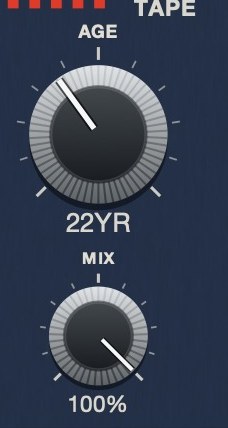 AGE on TRIPLE OG is in years because that is what the quantity is. Nought to sixty, darker and noisier and less steady as it climbs.
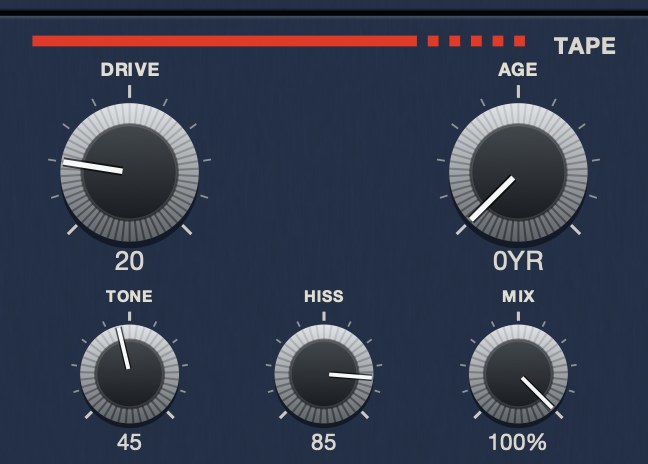 HISS at 85. Same panel, same everything else. The bed sits under the music rather than on top of it.
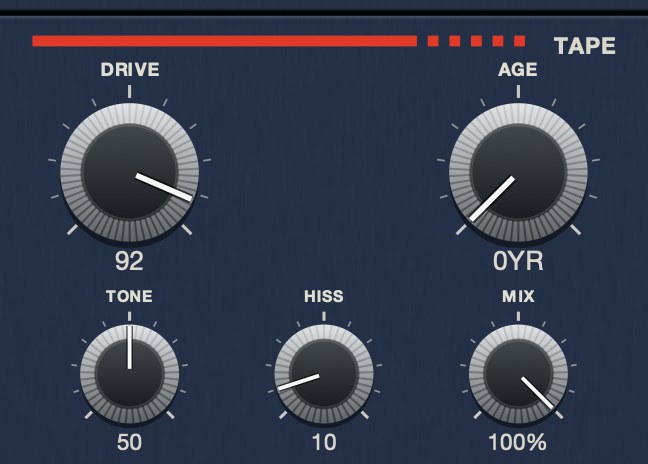 DRIVE at 92. Soft asymmetric saturation, oversampled, with the level held flat across the travel.
The settings, inverted
Wear. A mastering chain wants a machine that was aligned this morning.
A lofi chain wants one nobody has serviced. If a plugin has an age or wear control, this is
the one to move first, because it usually moves several behaviors at once in the way they
actually move together.
Noise. In mastering, the noise floor is something to keep under the
music. In lofi it is part of the music, and it wants to be audible in the gaps.
Tape hiss is the fastest single change you can make
to a clean production, and it is also the one most people set ten decibels too low to
hear.
Speed. Mastering work wants speed rock steady. Lofi wants it to wander.
This is the behavior that no other plugin in your folder supplies, and it is what makes a
bandwidth-limited noisy track read as old rather than filtered.
Wow and flutter covers what the two halves of
that movement sound like.
Bandwidth. Both want less top end, but they want it differently. In
mastering, the loss should be gradual and level-dependent. In lofi it can be severe, and
the important part is that the top goes soft rather than vanishing. A steep filter gives
you a muffled modern recording; saturation of the highs gives you a worn tape.
TRIPLE OG
is a cassette tape simulation, so it starts where a lofi chain wants to be.
AGE runs from nought to sixty years and moves wear, noise and stability
together. There's a demo on the page.
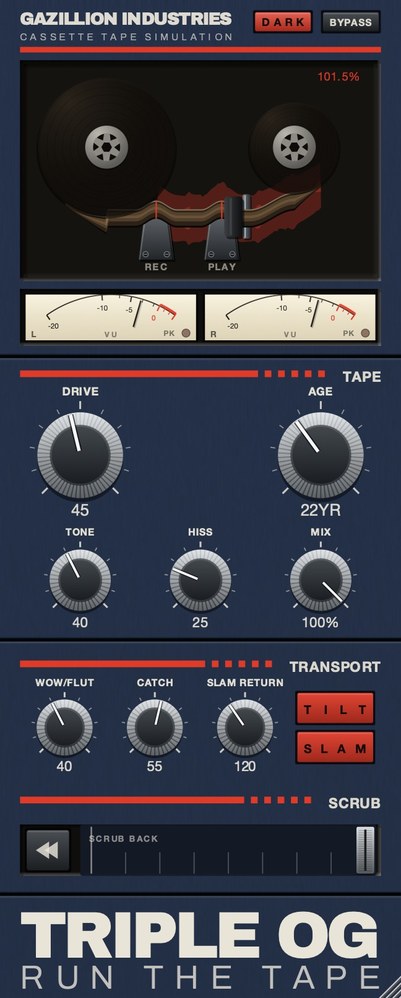 The whole thing. Top half is the machine, bottom half is the tape, and the SCRUB strip along the bottom is played by hand.
Why the reference matters more than the plugin
Most tape plugins are modeled on studio reel machines, because that is what
professional engineers used. Those machines were fast, wide, quiet and stable, and their
makers spent decades making them more so. A faithful reel simulation is therefore a
fairly clean-sounding thing, and no amount of turning knobs on one will produce the sound
of a cassette that has been played four hundred times.
A cassette is slow, narrow and consumer-built. Everything a reel machine was designed
to avoid, a cassette does by default. That is why the reference is the decision, and it is
made before you compare a single control. Detail in
how to make music sound
like a cassette tape.
 SCRUB is played, not set.
A lofi tape chain that works
- Put it on a bus, not on every channel. Instability that is
independent on each track smears the timing rather than loosening it.
- Set the wear by ear on the brightest source in the mix, usually
hats or a shaker.
- Bring the noise up until you hear it in the gaps, then back it off
slightly. Audible is the target; obvious is too far.
- Add speed movement last, and less than feels right at first. It
accumulates over a full track in a way it does not over four bars.
- Check in mono, because noise and modulation that sound wide can
collapse or cancel.
- Match the level and bypass. If the bypassed version sounds better
at matched level, you have gone too far, and that is a normal place to end up.
Hear it
Lofi tape is a set of faults turned up rather than an effect. Here is a loop clean, then the same loop through a deck with age, noise, drive and speed movement on it.
Dry — no processing — speed holds at 1.000
Age 35, hiss 45, drive 30, wow 40 — a worn deck — speed 0.951 to 1.059
The same eleven seconds each time, rendered offline through TRIPLE OG at the settings shown. No other processing, no master bus, no edits.
Making it sit in a modern mix
The awkward part of lofi is that the record still has to compete. A track processed to
sound like a worn cassette is quieter, duller and less stable than everything around it in
a playlist, and the usual response is to undo the character with a limiter until it is loud
and no longer lofi.
The way out is to be selective about what gets aged. Age the parts that carry the mood
and leave the parts that carry the weight. Drums and bass can stay mostly intact while
keys, samples, guitars and background layers go through the deck, and the result reads as
a lofi record while still having a floor under it. This is closer to how the reference
records were actually made than putting everything through one machine: the tape stage
applied to some of it, at some point, not to all of it at once at the end.
The other half is the top end. Lofi processing takes away the frequencies that make a
mix sound loud, so a lofi track at the same measured level sounds quieter than a clean one.
Leave one element bright and unaged — a hat, a transient, a top layer — and the mix
keeps a sense of level without giving up the texture everywhere else.
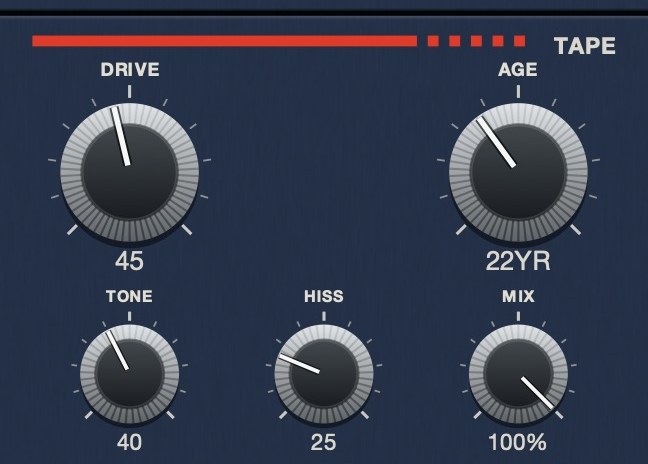 The medium, as five controls. AGE reads in years rather than a percentage, because that is what the quantity is — here it is set to 22.
Hear TRIPLE OG
Where the lofi ceiling is
There is a point past which more processing stops adding character and starts removing
information, and it arrives sooner than most people expect. The signs are consistent: the
bass stops having pitch and becomes a rumble, hats turn into noise bursts rather than
metallic sounds, and any two takes start to sound identical because the differences between
them have been processed away.
The useful test is memory. Play the aged version, then the original, then the aged
version again. If the second pass through the aged version sounds thin rather than warm,
the setting was tuned while your ears were adjusting to it rather than tuned to the
material. This happens to everybody and it is the main reason lofi mixes tend to arrive
over-processed.
Aiming low and stacking also beats aiming high in one pass. Two gentle stages in
different places — some age on the sampler, a little more on the bus — sound more like
a signal that went through several imperfect things than one heavy setting does, because a
signal that went through several imperfect things is exactly what the references were.
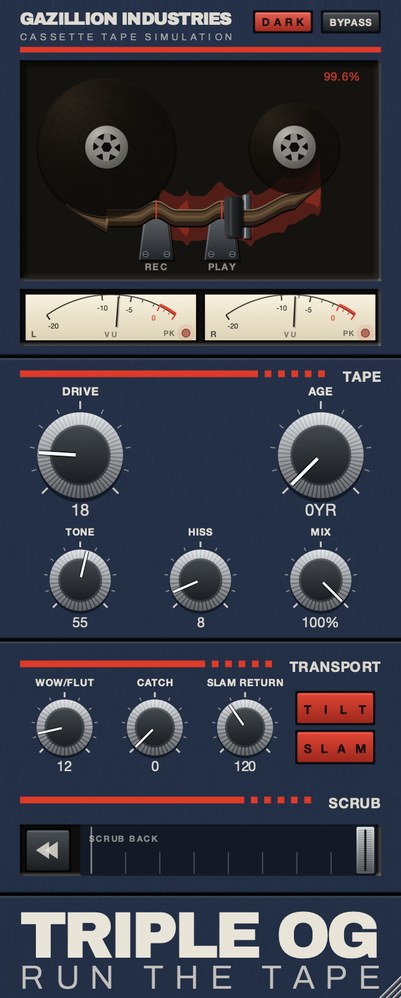 A well-kept deck. AGE at nought, hiss at 8, barely any speed movement.
This is the flattering setting and the one most cassette plugins ship at.
A well-kept deck. AGE at nought, hiss at 8, barely any speed movement.
This is the flattering setting and the one most cassette plugins ship at.
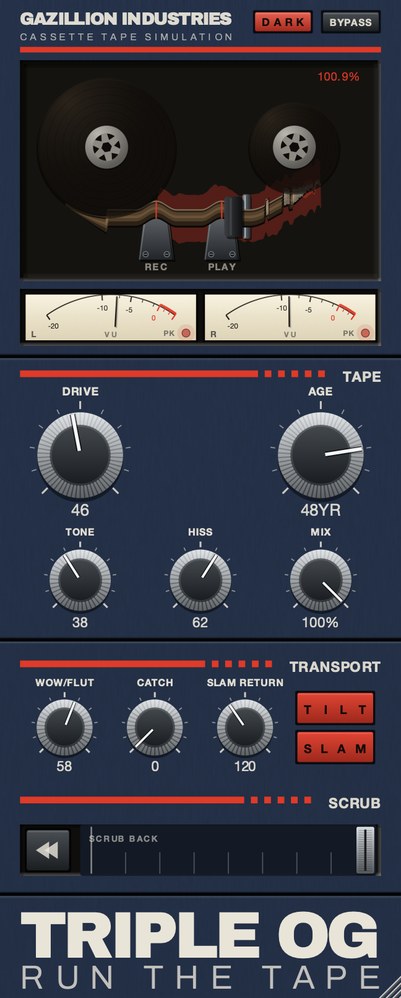 The same machine, forty-eight years on. Four things moved together —
age, noise, bandwidth and instability. Turning any one of them up on its own does not get
here, which is the whole point.
The same machine, forty-eight years on. Four things moved together —
age, noise, bandwidth and instability. Turning any one of them up on its own does not get
here, which is the whole point.
Lofi tape on vocals
Vocals are the hardest thing to age well, because the ear has a lifetime of experience
with what a voice should sound like and notices interference immediately.
The first problem is intelligibility. Most of what makes consonants legible lives in the
range that tape processing softens first, so a vocal that sounded characterful in solo
frequently turns out to be unintelligible in the mix. Check aged vocals against the
arrangement rather than alone, and at a low level rather than a loud one, because quiet
playback is where words disappear first.
The second is pitch. Speed instability that is charming on keys is distressing on a
voice, because a voice is the one source where the listener knows exactly what the pitch
was supposed to be. Keep instability substantially lower on vocals than on anything else,
or apply it only to a duplicate layer sitting under the clean one.
That layering approach solves both problems at once and is how most records that sound
like this were actually made. Keep the main vocal clean or nearly so, send a duplicate
through the deck with everything turned up, and balance it underneath. The character is
audible, the words survive, and you can change your mind about the amount later without
re-recording anything.
When it is finished
Lofi has no obvious stopping point, because there is no correct level of degradation the
way there is a correct level for a vocal. Three checks work better than a setting.
Play it after silence. Leave the room, come back and play it cold. Ears
adjust to processing within about a minute, and almost every over-aged mix was tuned by
ears that had already acclimatized to the previous version.
Play it after a reference. Not to match it, but to notice which
direction the difference runs. If your track is markedly darker and noisier than the
records you are aiming at, that is worth knowing before mastering rather than after.
Play it on a phone. Lofi processing removes exactly the frequencies a
small speaker relies on, so a mix that sounds warm on monitors can vanish entirely on a
phone. If the track still communicates there, the processing is inside the limit.
Everything below is answered the same way we built TRIPLE OG — the tape is the easy half, the transport is the half almost nothing does.
Questions people ask
What is the best lofi tape plugin?
One modeled on a cassette rather than a studio reel, with wear, noise and speed
instability as first-class controls. A reel simulation can be pushed toward lofi, but it
starts a long way from it.
Is there a free lofi tape VST?
There are free tape plugins that handle saturation and high-frequency loss well. The
usual gap is convincing speed instability, which is the behavior that does most of the
lofi work.
Why does my lofi chain still sound clean?
Usually because every plugin in it is doing the same job. Three things rolling off the
top give you a duller track. Age comes from different damage at once: less bandwidth, a
noise floor, and a grid that is not perfectly locked.
Should I use tape on individual tracks or the bus?
The bus, in nearly every case. Independent speed movement per track pulls the mix apart;
shared movement on a bus keeps everything drifting together, which is what a single machine
would have done.
Why do my lofi tracks sound quiet next to everything else?
Because lofi processing removes the high frequencies that make a mix read as loud. The
fix is not more limiting; it is leaving one bright element unprocessed so the mix keeps a
sense of level, while the rest carries the texture.
Should I age everything or just some parts?
Some parts, nearly always. Aging the elements that carry the mood and leaving the ones
that carry the weight gives you a lofi record with a floor under it. It is also closer to
how the reference records were made, since the tape stage applied to part of the signal
chain rather than to the finished master.
How do I know when I have gone too far?
When the bass stops having pitch and two different takes start sounding the same. Play
the processed version, then the original, then the processed version again; if the second
pass sounds thin rather than warm, you tuned it while your ears were adjusting.
What TRIPLE OG does
TRIPLE OG is our cassette tape simulation, which puts it at the lofi end of the category
by construction rather than by turning a reel machine down. AGE runs from
nought to sixty years and makes the tape darker, noisier and less stable as it climbs.
HISS is a continuous broadband bed, TONE sets playback
brightness, DRIVE the thickness, and WOW FLUT the speed
instability. SLAM, SCRUB and CATCH are
the transport, on the face.
Nobody ever got a worn cassette by servicing a studio machine less often.
“Most tape plugins treat the transport as something to model quietly in the background, but this one hands it to you as an instrument.”
Best Tape Emulation Plugins · AudioColour.com
TRIPLE OG — cassette tape simulation for Mac and Windows, with a transport
that drags, jams and sprints to catch up. There is a demo on the page.
Hear it
Keep reading
- How to make music sound like a cassette tape — Softer highs, saturation, hiss, wow and flutter, channel mismatch and dropouts.
- Tape hiss — Where it comes from, how to reduce it cleanly, and how to add it on purpose.
- Wow and flutter — What causes them, what they sound like, and how to add them on purpose.
- Best cassette plugins — What makes a cassette sound like a cassette, and what the field costs.
- Best lofi plugins — The four jobs a lofi chain needs, and what to buy first.
- Best tape emulation plugins — Reel and cassette are different products. Pick the machine first.
- Tape plugins for Ableton Live — Live covers saturation. Speed, noise and transport need TRIPLE OG.
- Tape plugins for Logic Pro — ChromaGlow covers saturation. Speed, noise and transport need TRIPLE OG.